











Staying on schedule is important when using injectable birth control. However, appointments can sometimes be missed because of work, travel, illness, or unexpected changes in daily routines.
If you use Norifam Injection, you may wonder whether being a few days late affects your protection against pregnancy. You might also have questions about when to get your next dose and whether additional contraception is necessary.
Understanding what to do after a missed appointment can help you make informed decisions about your reproductive health.
What Happens If You Miss Your Scheduled Injection?
If you miss your monthly contraceptive injection, the next step depends on how many days have passed since your scheduled appointment.
According to international family planning guidance, combined monthly contraceptive injections can generally be administered up to seven days before or seven days after the scheduled date without requiring additional contraceptive protection.
However, if you are more than seven days late, you may need backup contraception and a healthcare professional’s assessment before receiving your next injection.
Being late does not automatically mean you are pregnant. It simply means your protection may become less reliable, making timely medical advice important.
How Does Norifam Work?
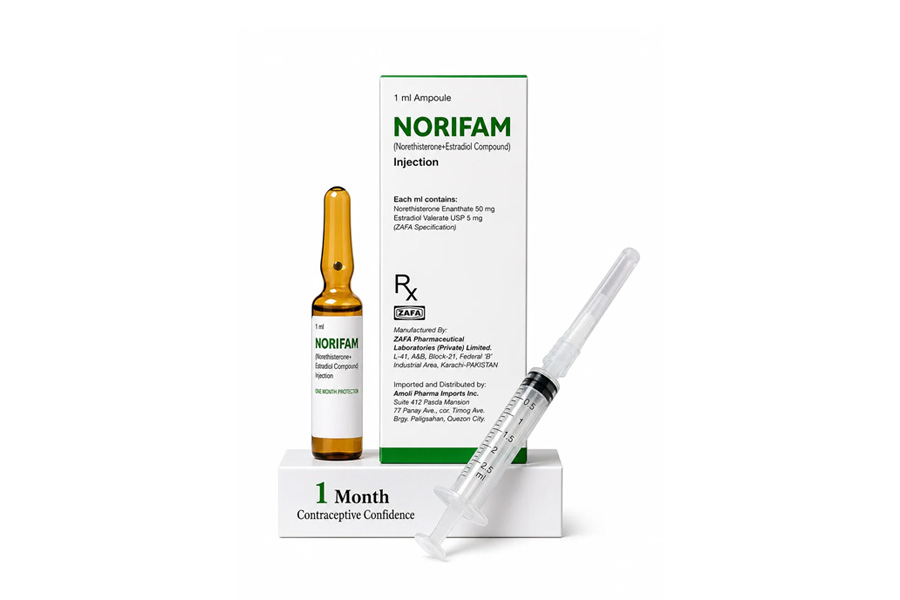
Norifam is a combined hormonal contraceptive containing two active ingredients:
- Norethisterone enanthate (50 mg): A synthetic form of progesterone, also known as a progestin.
- Estradiol valerate (5 mg): A form of estrogen.
These hormones primarily help prevent ovulation, which is the release of an egg from the ovaries. They also affect cervical mucus, making it more difficult for sperm to reach an egg.
Unlike daily contraceptive pills, this method is administered approximately once every four weeks by a qualified healthcare professional.
For people who prefer not to remember a pill every day, monthly contraception can be a convenient option. However, regular appointments are still necessary to maintain reliable pregnancy prevention.
How Many Days Late Can You Be for Your Monthly Injection?
The recommended timing depends on the date your next injection was originally scheduled.
For combined monthly injectables, the general guidance is:
| Timing | What You Should Know |
| Up to 7 Days early | The next injection can generally be administered. |
| On your Scheduled date | This is the preferred time for your next dose. |
| Up to 7 days late | You can generally receive the injection without additional contraceptive protection |
| More than 7 days late | Additional precautions and medical assessment may be needed. |
These recommendations apply to combined monthly injectable contraceptives. They should not be confused with the schedules for three-month injectable contraceptives, which have different timing guidelines.
If you are unsure about your appointment date, contact your healthcare provider rather than estimating how much protection remains.
What Should You Do If You Are More Than Seven Days Late?
If you have missed your scheduled Norifam Injectable appointment by more than seven days, take the following precautions.
1. Contact Your Healthcare Provider
Arrange a consultation as soon as possible.
Your healthcare provider will consider your previous injection date, recent sexual activity, and pregnancy risk before advising when to receive your next dose.
2. Use Backup Contraception
Avoid unprotected sex while waiting for professional guidance.
Condoms can provide additional pregnancy prevention and help reduce the risk of sexually transmitted infections.
If your healthcare provider determines that you can safely receive a late injection, you will generally need backup contraception for the first seven days afterward.
3. Discuss Emergency Contraception When Appropriate
If you have been more than seven days late and have had unprotected sex within the past five days, ask a healthcare professional promptly about emergency contraception.
The appropriate option depends on your circumstances. Some emergency contraceptive medicines also affect when hormonal contraception can be restarted.
For this reason, do not assume every emergency contraceptive option follows the same instructions.
4. Check Whether Pregnancy Needs to Be Ruled Out
Before restarting an overdue injection, your healthcare provider may need to determine whether pregnancy is possible.
A pregnancy test may be recommended depending on when you last had unprotected sex. Testing too early can produce a negative result even when pregnancy has occurred.
Your provider can advise whether testing needs to be repeated.
Can You Get Pregnant After Missing a Monthly Injection?
Yes, pregnancy is possible if your contraceptive protection is interrupted.
Monthly hormonal injections are designed to prevent pregnancy when administered according to the recommended schedule. Delaying a dose beyond the recommended window may reduce their reliability.
However, the likelihood of pregnancy cannot be determined simply by counting the number of missed days.
Other factors matter, including when you last received your injection, whether you had unprotected sex, and whether another contraceptive method was used.
If pregnancy is possible, seek professional advice instead of waiting for symptoms to appear.
Will Missing an Injection Affect Your Period?
Changes in menstrual bleeding can occur with hormonal contraceptives, even when injections are received on schedule.
Some people experience:
- Light spotting between periods
- Irregular bleeding
- Changes in menstrual flow
- Delayed or missed periods
- Breast tenderness or headaches
A delayed injection can make it more difficult to interpret bleeding changes, but a missed period does not automatically indicate pregnancy.
Likewise, bleeding does not reliably rule out pregnancy.
If you have missed your appointment and are concerned about possible pregnancy, a healthcare professional can help determine when testing is appropriate.
How Can You Avoid Missing Your Next Appointment?
Building a simple routine can make monthly contraception easier to manage.
Save your next appointment immediately. Add the date to your phone calendar before leaving your consultation.
Set advance reminders. Consider scheduling notifications seven days and two days before your appointment.
Plan around your regular activities. Work commitments, travel, and transportation can affect your ability to attend appointments.
Keep a record of your injections. Saving the exact administration dates helps your healthcare provider assess any scheduling concerns.
Ask about other contraceptive options if necessary. If monthly appointments are consistently difficult, your provider may recommend exploring another method that better suits your lifestyle.
The best contraceptive method is one that is medically appropriate and practical for you to use consistently.
Frequently Asked Questions
Is it okay to be three days late for a Norifam injection?
Generally, yes. A repeat combined monthly contraceptive injection can typically be administered within seven days after the scheduled date without additional contraceptive protection, provided there are no other medical concerns.
What if I am ten days late for my injection?
Being ten days late exceeds the usual seven-day window. Avoid unprotected sex and consult your healthcare provider promptly.
Depending on your circumstances, pregnancy assessment and backup contraception may be necessary.
Do I need to restart my contraceptive treatment after missing a dose?
Not necessarily. Missing an appointment does not automatically mean you must restart your treatment from the beginning.
Your provider will assess your situation and determine when your next injection can safely be administered.
Can I receive my injection earlier than scheduled?
Combined monthly injectable contraceptives can generally be given up to seven days earlier than the planned date.
If you expect scheduling difficulties, discuss an appropriate appointment date with your healthcare provider.
Does monthly injectable contraception protect against sexually transmitted infections?
No. Hormonal contraceptive injections help prevent pregnancy but do not protect against HIV or other sexually transmitted infections.
Condoms are recommended when STI protection is needed.
Stay Informed and Keep Your Contraceptive Schedule on Track
Missing an injection appointment can be concerning, but understanding the recommended timing helps you respond appropriately.
For combined monthly contraception, a delay of up to seven days is generally within the accepted administration window. Longer delays require additional care because pregnancy protection may be reduced.
If you have questions about your schedule, eligibility, or possible side effects, speak with a qualified healthcare professional.
At Now Express PH, you can learn more about Norifam Injection and access a doctor-reviewed process for contraceptive care.
Your reproductive health deserves reliable information, appropriate medical guidance, and a contraceptive routine that works for you.
If you need medical guidance before choosing a contraceptive method, you can also visit NowServing.ph to connect with an appropriate healthcare professional. A PRC-licensed doctor reviews every request.
Only for the treatment of conditions diagnosed by a physician.





Add Comment